




The Staffroom Blog
Ideas worth sharing. Conversations worth having.
Honest writing on educational technology, building a knowledge business, and everything in between. No jargon. No pretending it's easier than it is. Just real ideas for educators ready to grow.

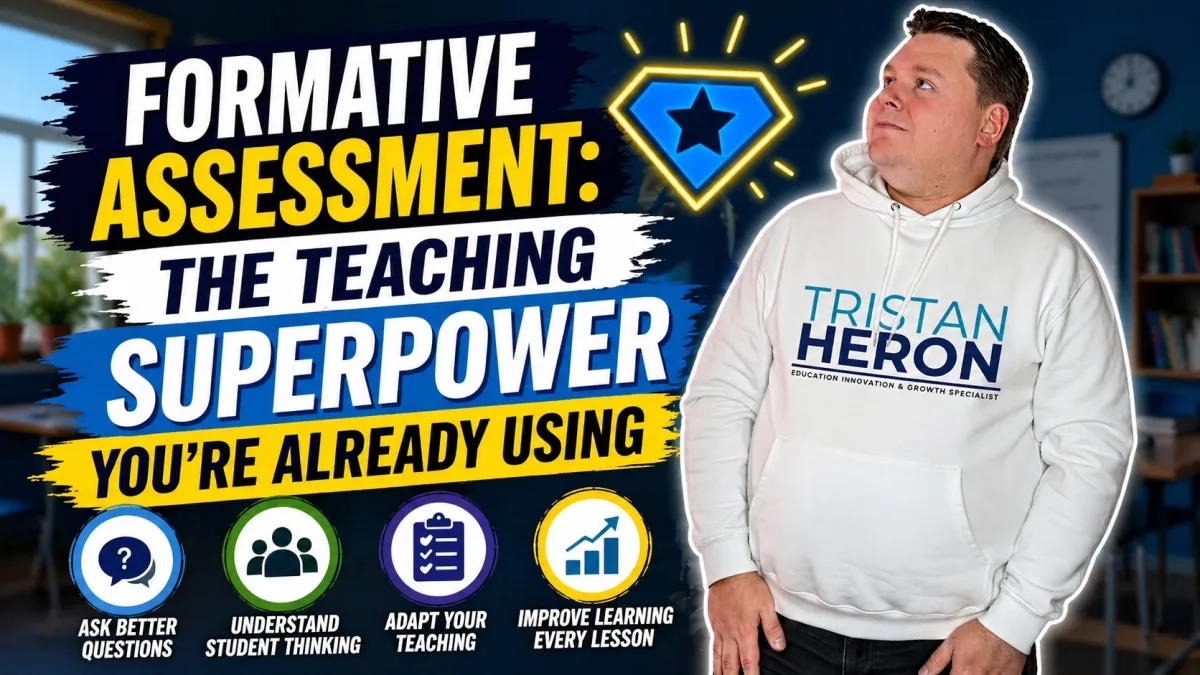
Formative Assessment: The Teaching Superpower You’re Already Using
When educators hear the term formative assessment, it can sometimes sound overly academic, complicated or like one more thing to add to an already full workload.
But here is the truth:
Most teachers are already using it every single day.
At Evolve EdTech, we often remind educators that some of the most powerful teaching strategies are not flashy or complex. They are the practical things great teachers do consistently.
Formative assessment is one of them.
What Is Formative Assessment?
Formative assessment is the ongoing process of gathering evidence about student learning while learning is happening.
It is not just a formal test or quiz.
It happens during lessons, discussions and learning sequences when teachers check understanding, notice misconceptions and decide what to do next.
That means formative assessment can include:
Asking questions during a lesson
Listening to student responses
Watching students complete tasks
Exit tickets
Mini whiteboard checks
Quick digital quizzes
Peer feedback
Class discussions
Teacher observation
If you are doing these things, you are already using formative assessment.
Why It Matters More Than Ever
Teaching in 2026 means working with diverse classrooms, varied learning needs and increasing curriculum demands.
That makes responsive teaching essential.
Formative assessment helps teachers identify:
What students understand
Where misconceptions exist
Who needs support
Who is ready for extension
Whether teaching strategies are working
What needs revisiting next lesson
This allows teachers to respond early rather than waiting until students fall behind.
That is powerful teaching.
Formative vs Summative Assessment
Many educators are familiar with summative assessment.
That is the assessment after learning has taken place — such as exams, projects or final tasks used to measure achievement.
Formative assessment is different.
It is designed to improve learning during the process.
Think of it this way:
Summative assessment = How did students go?
Formative assessment = How are students going right now, and what should happen next?
One measures learning.
The other helps create it.
Both matter, but formative assessment is where many daily teaching wins happen.
It Supports Diverse Learners
No two students are exactly the same.
Some grasp concepts quickly. Others need repetition, visuals, scaffolds or extra time.
Formative assessment helps teachers respond to those differences with intention.
For example:
A quick check-in may reveal confusion before frustration builds
A discussion might show deeper understanding than written work suggests
A digital quiz may identify patterns across the whole class
An observation might highlight who needs targeted support
This helps create more equitable learning environments.
It Does Not Need to Be Complicated
One of the biggest myths is that formative assessment must be formal, lengthy or data-heavy.
It does not.
Sometimes it is simply:
Asking the right question
Listening carefully
Spotting a pattern
Using thumbs up/down
Running a quick Kahoot! or Quizizz check-in
Reviewing one sample together
Small moments can produce valuable evidence.
What Smart Classrooms Really Do
At Evolve EdTech, we believe the smartest classrooms are not always the fanciest.
They are the ones where teachers consistently use evidence to guide instruction and support students.
That is what formative assessment does.
It turns assessment from judgement into growth.
Final Thoughts
If you ask questions, check understanding, adjust your teaching and respond to student needs, you are already doing formative assessment.
And you are likely doing more of it than you realise.
That is not just good teaching.
That is a teaching superpower.

JOIN OUR COMMUNITY
Join thousands of educators in the know.
Get the latest EdTech insights, business tips, free resources, and community updates delivered straight to your inbox. No spam.



© Copyright 2026 Tristan Heron. All rights reserved.