









The Staffroom Blog
Ideas worth sharing. Conversations worth having.
Honest writing on educational technology, classroom practice, and the professional life of a modern educator. No jargon. No pretending it's easier than it is. Just real ideas for educators ready to grow.

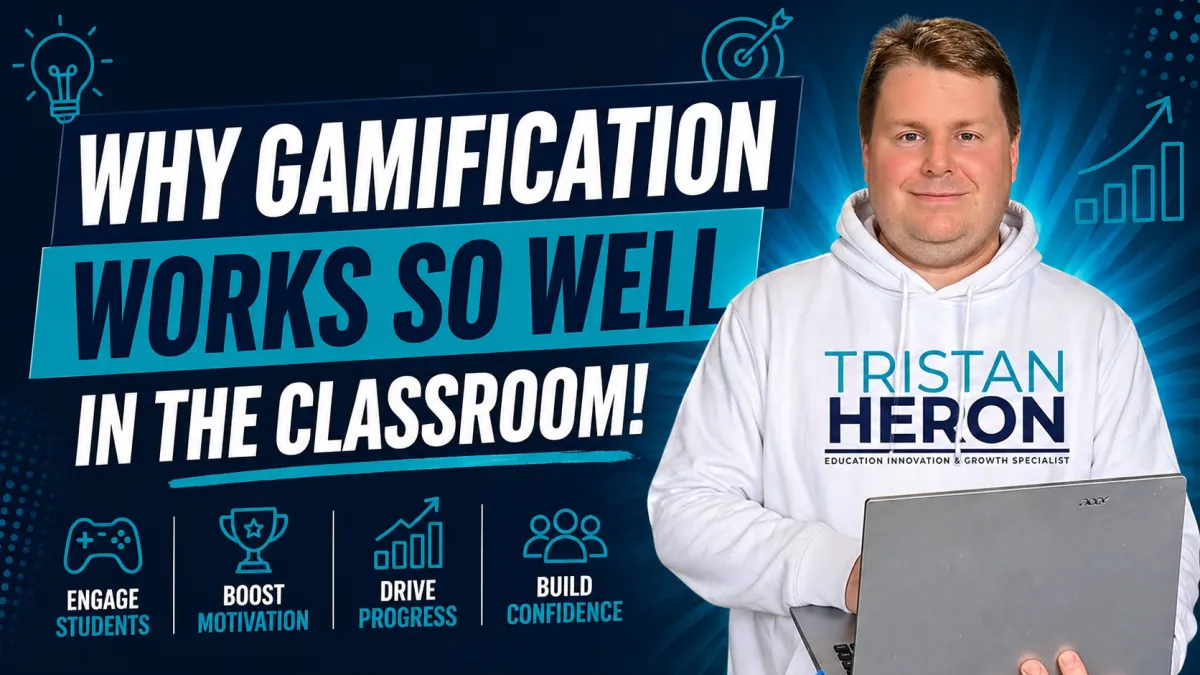
Why Gamification Works So Well in the Classroom
Gamification is more than a trend.
When used with purpose, it can become one of the most effective ways to increase motivation, engagement and meaningful learning in today’s classrooms.
At Evolve EdTech, we believe the best learning experiences do not just deliver content — they invite students into the process. Gamification can do exactly that by turning passive lessons into active challenges students want to complete.
And no, it does not mean every lesson becomes a video game.
It means using proven game principles to make learning more motivating, structured and rewarding.
What Is Gamification?
Gamification is the use of game-inspired elements in learning, such as:
Points
Badges
Levels
Missions
Quests
Challenges
Progress bars
Rewards
Team competitions
These features can help students feel momentum, purpose and progress while still working toward academic outcomes.
1. Students Love Progress
One of the biggest reasons gamification works is simple:
Students love seeing progress.
Games constantly show players they are moving forward. The same principle can motivate learners.
When students earn points, unlock levels or achieve milestones, learning begins to feel:
Achievable
Purposeful
Rewarding
Worth continuing
Progress turns effort into something visible.
And visible growth can be highly motivating.
2. It Promotes Active Engagement
Gamified learning shifts students from passive listeners to active participants.
Instead of simply receiving information, students may complete:
Missions
Puzzles
Quizzes
Challenges
Team tasks
Mystery activities
When learners are doing rather than just listening, attention and participation often rise dramatically.
Students become involved in the lesson rather than watching it happen.
3. It Builds Resilience and Growth Mindset
Games teach a valuable lesson:
Failure is rarely final.
Players try again, learn from mistakes and improve through repetition.
That mindset is powerful in education.
Gamification can help students develop:
Persistence
Problem-solving stamina
Confidence after setbacks
Willingness to retry
Focus on improvement
These qualities matter far beyond school.
4. It Supports Differentiation
Every classroom includes learners at different levels.
Gamified tasks can make differentiation easier through:
Multiple entry points
Varied difficulty levels
Choice pathways
Self-paced progression
Optional extension challenges
Students can move at a pace that suits them while still working toward shared learning goals.
That balance is valuable.
5. Feedback Becomes Faster
Many gamified digital tools provide immediate feedback.
Platforms such as Kahoot!, Blooket and Quizizz help students know quickly whether they are correct or need to rethink.
This allows learners to:
Reflect instantly
Adjust thinking in the moment
Identify misconceptions early
Stay engaged in the learning cycle
Fast feedback fuels growth.
6. It Strengthens Collaboration and Culture
Gamification can also improve classroom relationships.
Used well, it encourages:
Teamwork
Friendly competition
Peer support
Respectful communication
Shared success
Positive energy
The classroom feels more connected and dynamic.
7. It Builds Real-World Skills
Great gamified learning often develops more than content knowledge.
Students practise:
Decision-making
Creativity
Strategy
Communication
Problem-solving
Leadership
These are future-ready capabilities that matter beyond assessment tasks.
Final Thoughts
At Evolve EdTech, we believe learning should challenge students — but it should also invite them in.
Gamification often does exactly that.
When designed thoughtfully, it adds progress, energy and motivation without losing academic purpose.
And when students want to keep going, great learning usually follows.

JOIN OUR COMMUNITY
Join thousands of educators in the know.
Get the latest EdTech insights, classroom strategies, free resources, and community updates delivered straight to your inbox. No spam.
By joining the community, you’ll receive practical tips, tools, and ideas to help you grow as an educator, along with updates and opportunities from Tristan Heron.
No spam. Just value. You can unsubscribe at any time, and your details will always be kept safe and secure.



© Copyright 2026 Tristan Heron Education Group. All rights reserved.