











The Staffroom Blog
Ideas worth sharing. Conversations worth having.
Honest writing on educational technology, classroom practice, and the professional life of a modern educator. No jargon. No pretending it's easier than it is. Just real ideas for educators ready to grow.

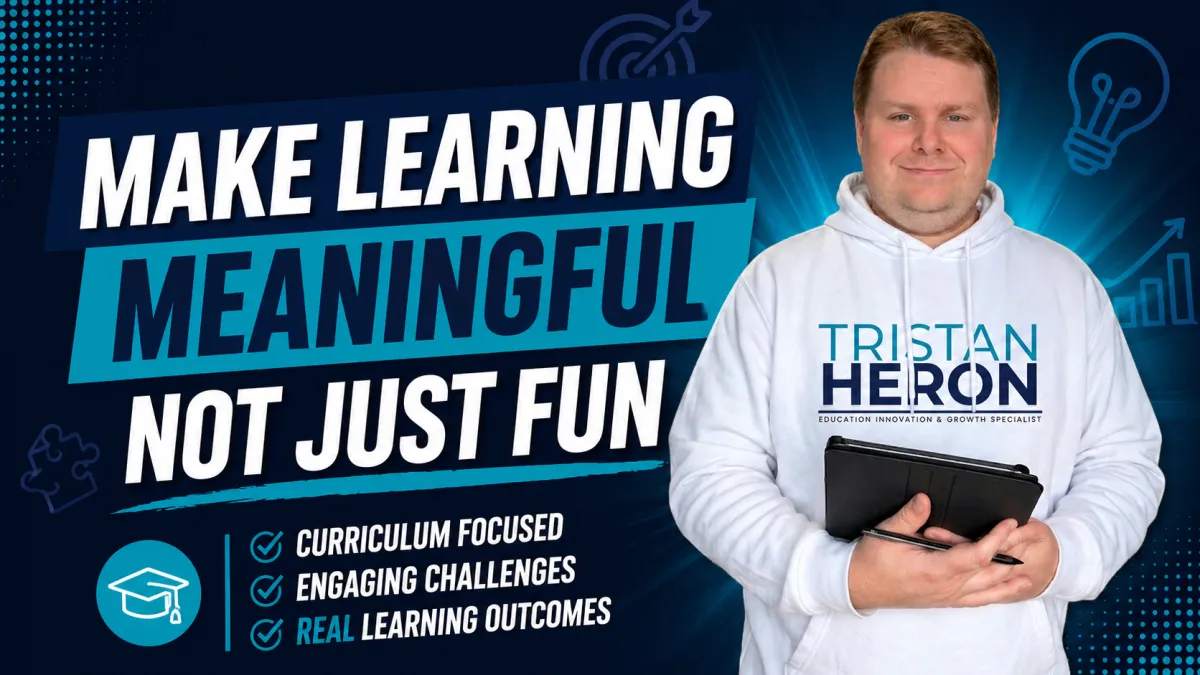
Digital Escape Rooms in the Classroom: More Than Just Fun
When many people hear the term digital escape room, they imagine a race against the clock filled with random puzzles, flashy gimmicks and students scrambling to be first.
That version might be entertaining.
But in a quality classroom setting, digital escape rooms should be much more than that.
At Evolve EdTech, we believe the strongest learning experiences blend engagement with purpose. Digital escape rooms can absolutely be fun — but when designed well, they also become a powerful tool for curriculum delivery, revision and skill development.
The fun is real.
But the learning is deliberate.
That is the difference.
What a Great Classroom Escape Room Looks Like
A classroom digital escape room is a structured learning experience built around clear learning intentions.
Every question, clue and challenge should connect directly to what students are learning.
That may include:
A current unit topic
Key syllabus knowledge
Literacy development
Numeracy skills
Revision before assessment
Critical thinking tasks
Problem-solving challenges
Rather than adding “fun” after the lesson, the learning is embedded throughout the experience.
The Puzzles Should Assess Understanding, Not Luck
This is where purposeful design matters most.
Students should not succeed because they guessed correctly or got lucky.
They should succeed because they can:
Apply what has been taught
Recall important knowledge
Analyse information carefully
Interpret evidence
Use reasoning skills
Solve meaningful problems
That means the escape room becomes a fresh format for demonstrating understanding.
It is assessment in action — just packaged differently.
The Goal Is Learning, Not Speed
Perhaps the most important reminder of all:
The goal is learning, not speed.
A classroom escape room is not about crowning the fastest student in the room.
It is not a competition to see who clicks quickest.
It is about giving students the chance to:
Revisit content
Strengthen confidence
Solve relevant challenges
Collaborate with others
Persist through difficulty
Experience success
Some students may finish quickly.
Others may need more time to think, discuss and try again.
That is perfectly fine.
Deep learning matters more than fast finishing.
Why Students Respond So Well
Digital escape rooms create a sense of momentum.
Every correct answer unlocks something new. Every clue feels purposeful. Every stage builds curiosity.
That often leads to:
Higher engagement
Greater focus
Better participation
Stronger persistence
Positive classroom energy
Students feel like they are progressing through an experience rather than simply completing another worksheet.
Works Across Subjects
One of the best things about digital escape rooms is their flexibility.
English
Vocabulary decoding
Reading comprehension
Grammar challenges
Text analysis
Mathematics
Equations
Logic puzzles
Measurement tasks
Data interpretation
Science
Concept revision
Classification tasks
Scientific reasoning
HSIE / Humanities
Historical sources
Geography clues
Timeline sequencing
This makes them useful across year levels and learning areas.
Easier to Build Than Many Think
Tools such as Google Forms make digital escape rooms surprisingly achievable through:
Response validation
Branching pathways
Section progression
Embedded media
Automatic feedback
You do not need advanced technical skills — just strong learning design.
Why They Shine
At Evolve EdTech, we believe some of the best teaching happens when students barely realise how much learning they are doing.
They are engaged, challenged and motivated, yet still building genuine knowledge and skills.
That is exactly where digital escape rooms shine.
Final Thoughts
Digital escape rooms are more than just fun.
They are a smart way to package familiar learning goals in a format that creates energy, curiosity and rigour.
And when students enjoy the journey, learning often goes deeper.

JOIN OUR COMMUNITY
Join thousands of educators in the know.
Get the latest EdTech insights, classroom strategies, free resources, and community updates delivered straight to your inbox. No spam.
By joining the community, you’ll receive practical tips, tools, and ideas to help you grow as an educator, along with updates and opportunities from Tristan Heron.
No spam. Just value. You can unsubscribe at any time, and your details will always be kept safe and secure.



© Copyright 2026 Tristan Heron Education Group. All rights reserved.